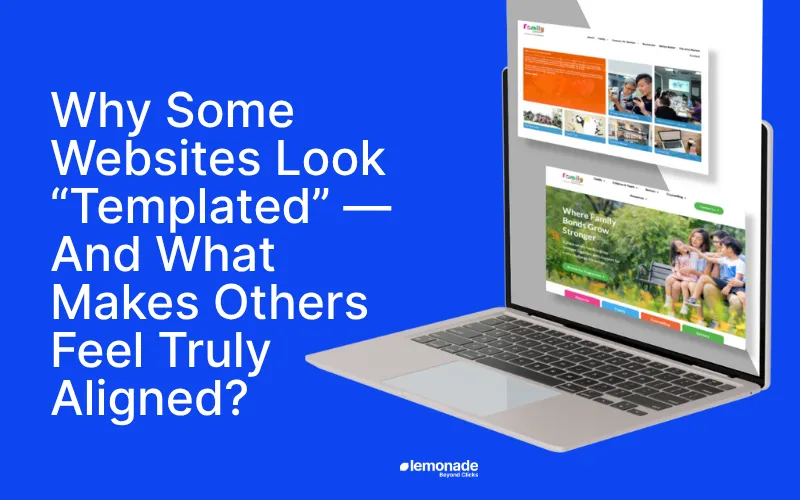
What Makes a Website Look Like a Template?
Lack of Brand Identity
Without a defined colour palette, font system, and visual tone, designers default to generic patterns. The site may “work,” but it doesn’t feel like yours. A real identity is a visual language: how confidence, innovation, warmth, or prestige are expressed consistently.
Inconsistent Messaging
Logo says “corporate,” imagery screams “startup,” and copy drifts between serious and casual. Mixed signals erode trust. When positioning is unclear, every small update becomes a patchwork and the whole thing starts to look stitched together.
No Storytelling or Purpose
Templated sites feel hollow because they don’t communicate purpose. Great websites guide users: what you do, why it matters, and why to act now. Without that narrative flow, pages are informational but forgettable.
What Makes a Website Feel Aligned and Attractive?
Brand Foundation First
Before a single line of code, we start with a focused brand alignment:
- Colour theory aligned with the emotional tone
- Typography that matches the brand’s voice
- Imagery and icons that reinforce personality
- Consistent tone, layout, and flow across every touchpoint
Clear Positioning
Are you bold or warm, minimalist or detailed, corporate or creative? We define the stance early and let it govern every pixel, paragraph, and headline. Nothing random. Nothing “templated.”
Purposeful Storytelling
We structure the user journey to answer three questions fast:
- What do you do?
- Why should I care?
- Why should I trust you?
Strategic pacing, concise copy, and meaningful visuals move visitors from curiosity to conviction.
Free E-Book: Designing Clarity
Audit your brand, align your visuals, and brief your team with confidence. This practical guide shows the exact steps we use to transform “functional” sites into unforgettable brand experiences.
Real-World Examples
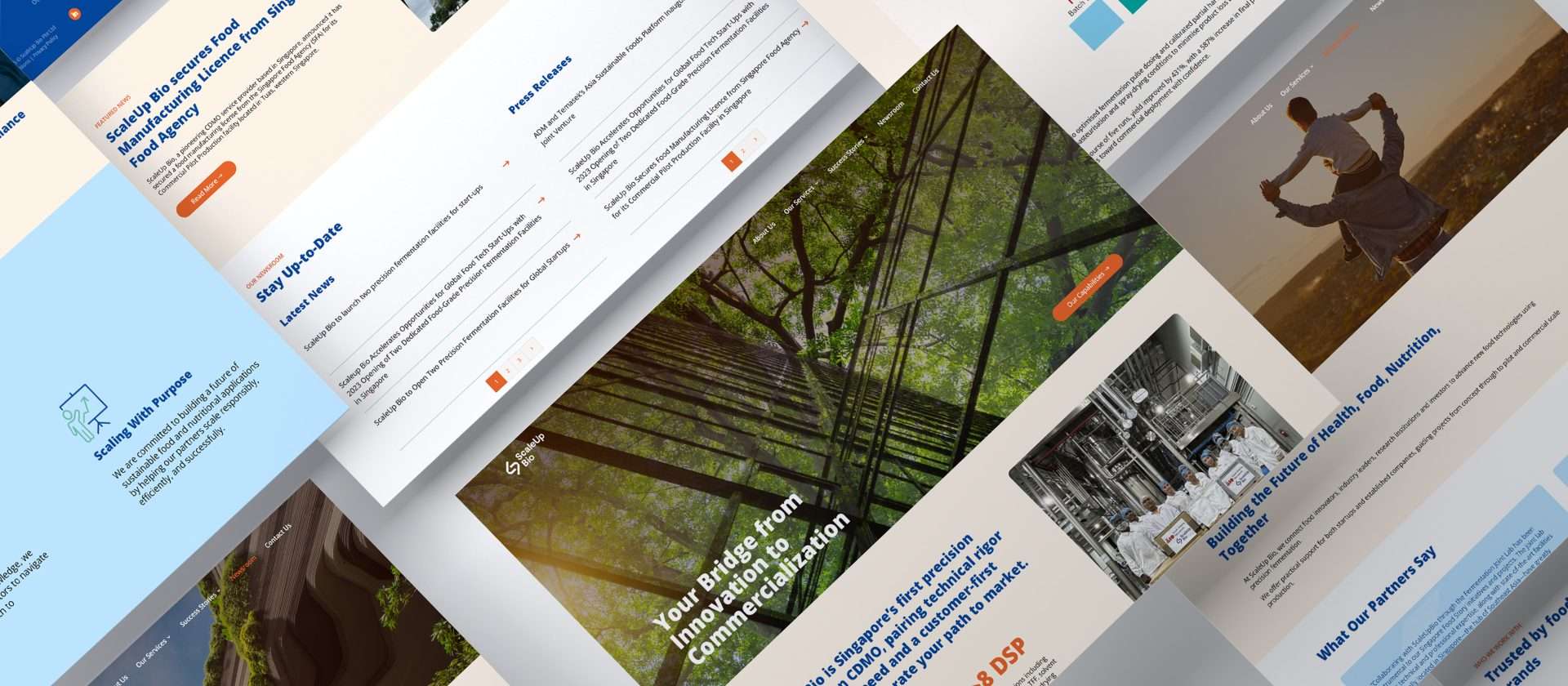
Scaleup Bio – Biotech Brand Refresh & Website Revamp
A Temasek-backed biotech needed a digital face that matched their science. We refined their identity, re-balanced credibility and ambition, and delivered a future-ready site that feels confident and professional.
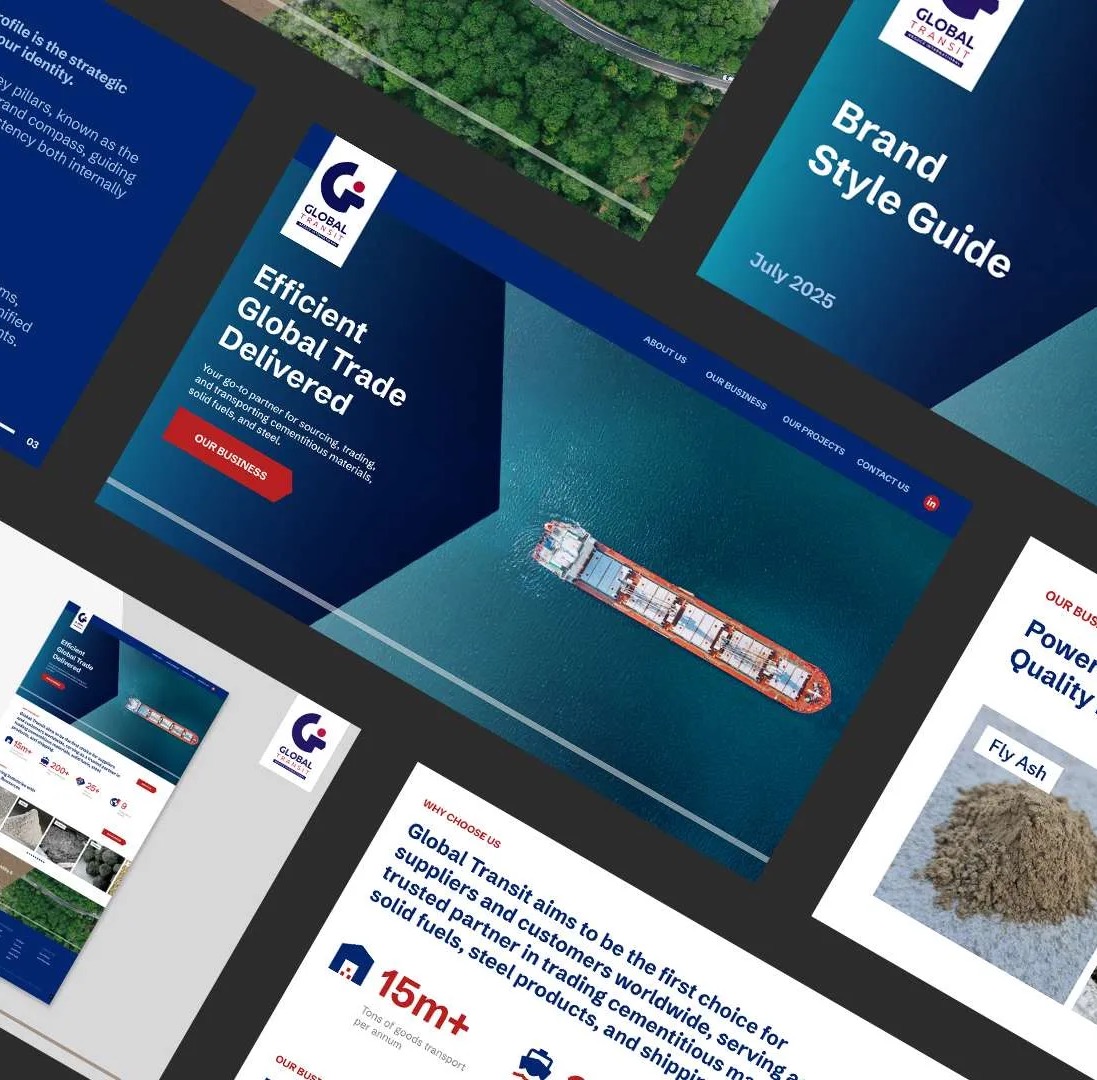
Commodities & Logistics – Brand & Web Redesign for a Growing SME
The client had outgrown their early site. We repositioned them around leadership and sustainability, introduced a stronger typographic system, and built a site that reflects global ambition.
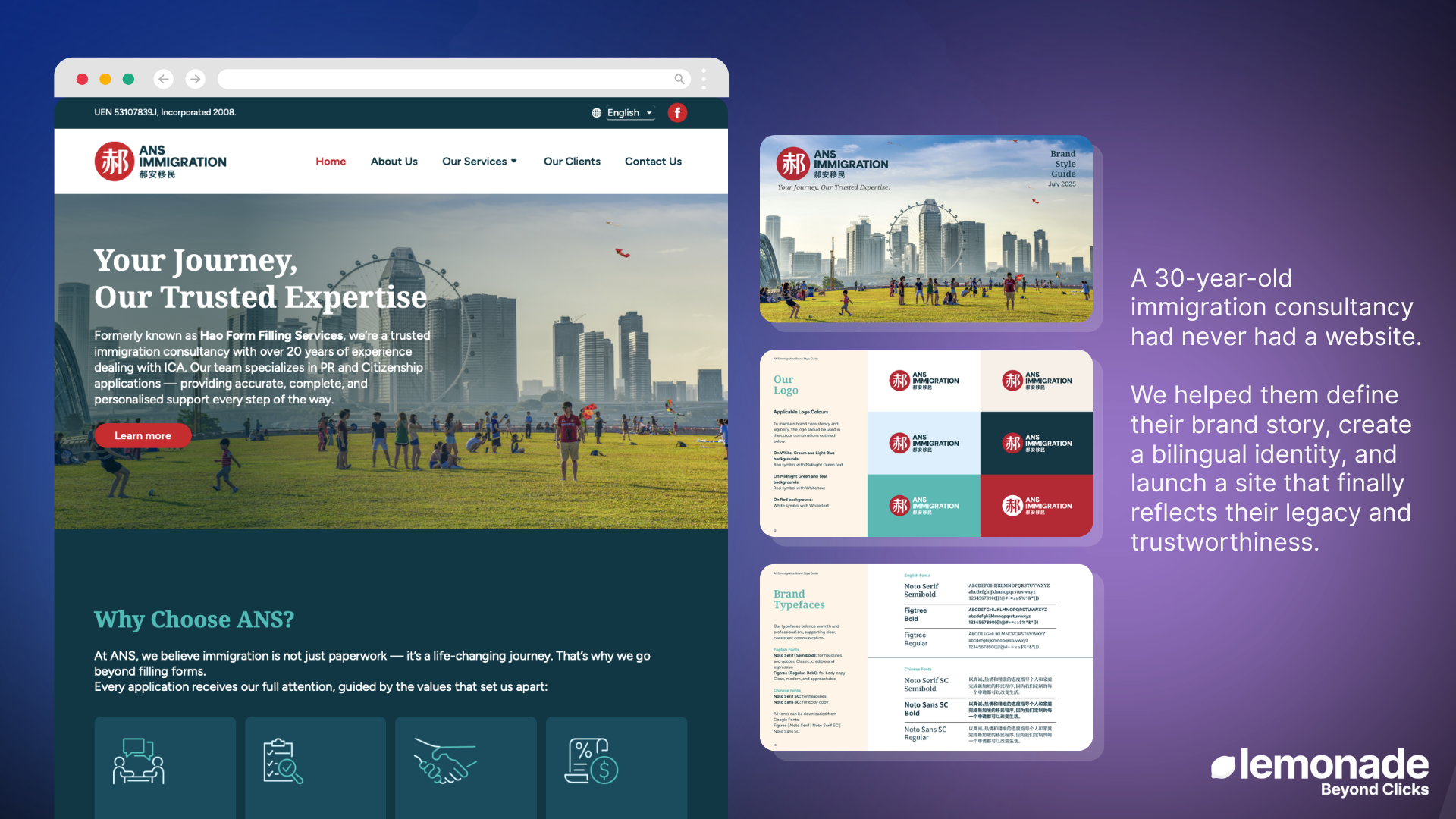
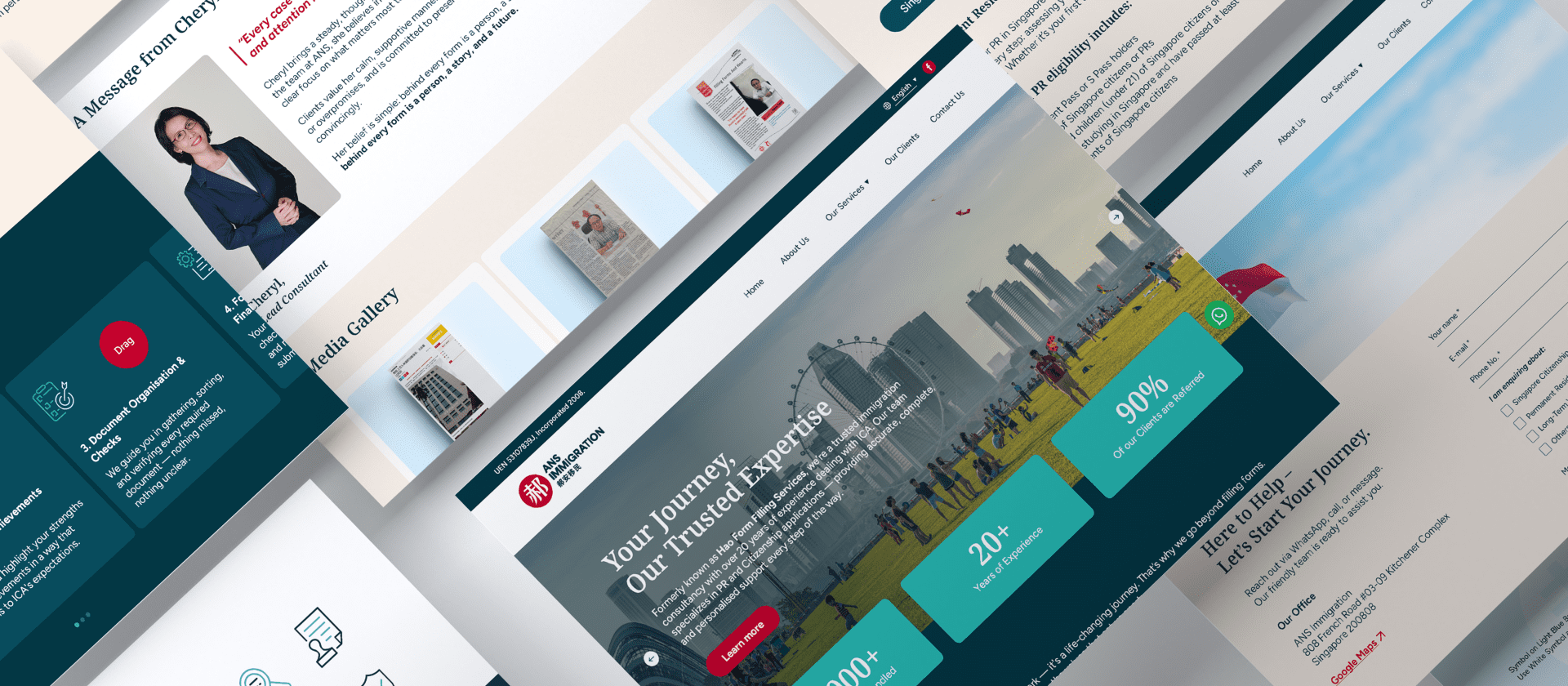
Immigration Consultancy – Legacy Brand Reimagined
Thirty years of reputation, zero website. We created a bilingual identity that honours heritage while speaking to modern expectations. Calm tones, refined typography, and clear pathways to enquiry.
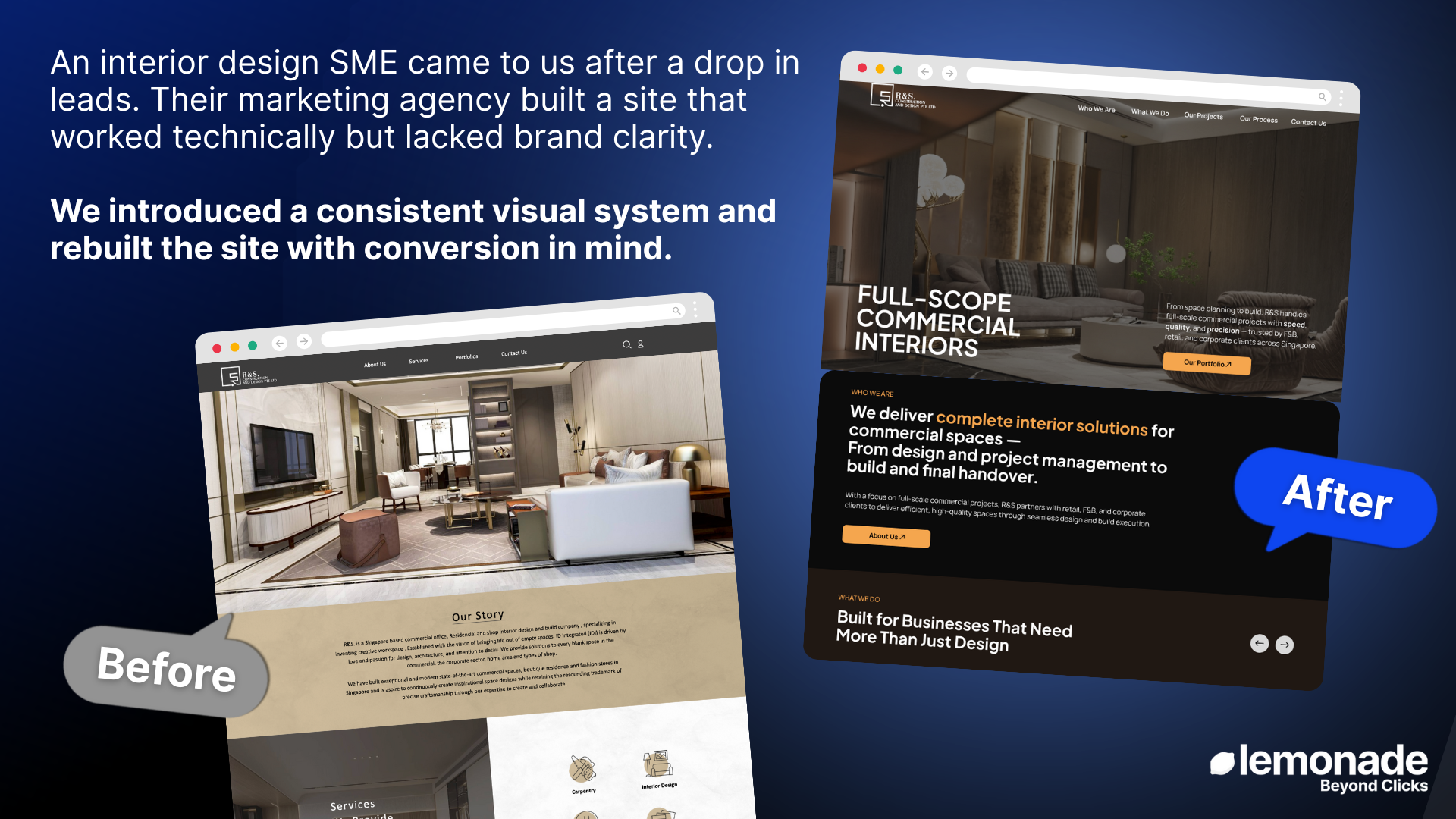
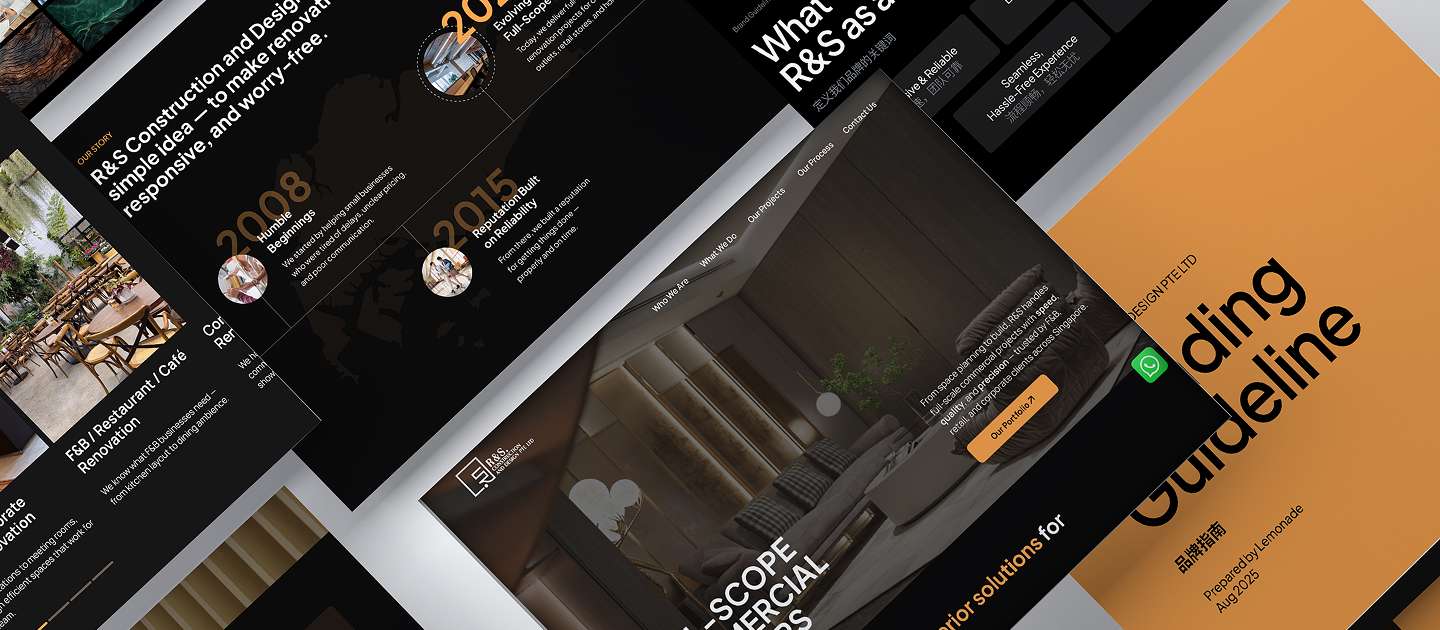
Interior Design SME – Mini Branding & Website Fix
Marketing spend was high but conversions were not. A compact brand guide plus a rebuilt site delivered cohesion, clarity, and stronger perceived value.
See the Interior Design Project
How to Avoid the Templated Look
- Start with brand clarity. Even a light alignment workshop beats none.
- Work with designers who ask “why.” Surface goals and guardrails before layouts.
- Enforce consistency. Social, decks, email, and site should feel like the same world.
- Avoid default performance templates. Conversion without brand harms long-term equity.
- Invest in a brand guideline. Fonts, colours, tone, and component usage in one place.
- Build for scale. New pages and campaigns should drop in without breaking the system.
- Design for emotion. Strategy isn’t just logic; it’s the feeling you want users to carry out.
Final Thoughts
Your website is often the first impression — and first impressions rarely get a second chance. If your site feels “off,” it’s not a design tweak problem; it’s a clarity problem. Fix the brand, and the website stops looking like a template.
At Lemonade, we combine strategy, storytelling, and design to build online identities that are unmistakably yours.
Prefer to Self-Audit First?
Grab the e-book, run the checklist, then come back with clarity. We’ll take it from there.
FAQs on Templated Websites & Web Design Improvement
1. Why does my website look like a template?
Usually because there’s no brand direction behind the design. When colours, typography, and imagery aren’t defined, designers fall back on pre-built layouts. The site works, but it doesn’t tell your story.
2. How can I make my website look more professional?
Start by refining your brand identity — choose a consistent colour palette, define 1–2 typefaces, and use real photography whenever possible. Then simplify your layout and spacing to create visual balance.
3. Can I still use WordPress or a page builder and not look generic?
Yes. The platform isn’t the issue — it’s how you use it. Customising global styles, creating consistent design rules, and avoiding default modules will make your site feel unique and intentional.
4. Why doesn’t my website feel “on brand” even after a redesign?
Because design and brand strategy weren’t developed together. A redesign without revisiting tone, positioning, and voice often just replaces one template with another. Brand clarity must come first.
5. How do I know if my website needs a refresh?
If visitors can’t tell what you do within five seconds, or if your site looks nothing like your current marketing materials, it’s time. Your website should evolve with your business, not lag behind it.
6. What are quick fixes to make my site feel less “cookie-cutter”?
Replace stock imagery with real visuals, add testimonials with faces, use consistent spacing and buttons, and write headlines that sound human. Small, authentic touches make a huge difference.
7. Do animations or fancy effects help my site stand out?
Only when used with purpose. Motion should guide attention or reinforce emotion — not distract. A calm, cohesive design often feels more premium than one filled with random effects.
8. How important is typography in web design?
Extremely. Fonts set tone and readability. Stick to two families: one for headings, one for body text. Choose something that matches your brand personality — not just what looks trendy.
9. How can I improve my website without rebuilding everything?
Start with a design audit. Identify what already works, then update visuals, spacing, and copy tone. A phased refresh can modernise your site without a full redevelopment.
10. What’s the first step to make my website feel truly mine?
Define your brand story before touching design. When your “why” and “who” are clear, your visuals, layout, and messaging naturally align — and no template will ever feel generic again.